Shuang Wu, Hidenori Yamaguchi, Koh Shibutani
Objective To determine the current perception thresholds (CPTs) for arm and mental foramen areas to enable a quantitative evaluation of the effectiveness of acupuncture treatment.
Methods Ninety-eight volunteers enrolled as participants and were randomly assigned to one of three groups: an acupuncture group (34 subjects); a sham acupuncture group (32 subjects) and a waiting group (32 subjects). CPTs for the arm and mental foramen areas were determined before and after acupuncture at LI4 Hegu of the left hand. A Neurometer CPT was used to evaluate the perception threshold at the homolateral mental foramen and arm. For further exploration, thresholdsof homolateral and contralateral mental foramina
were determined before and after acupuncture in a subgroup of 13 participants in the acupuncture group.
Results Acupuncture at LI4 increased the perception thresholds of the left mental foramen in the acupuncture group signifi cantly (p<0.01). The increases were signifi cantly greater than in the control group for all frequencies, and signifi cantly greater than sham acupuncture for 250 Hz and 5 Hz. In the subgroup, only the CPTs at 5 Hz increased significantly for the contralateral mental foramen.
Conclusions Acupuncture at LI4 increases theperception threshold in the mandibular area, but not in the arm. This fi nding is probably related to the analgesic effect of acupuncture.
Acupunct Med 2012;30:32–36. doi:10.1136/acupmed-2011-010055
Wednesday, April 18, 2012


Traditional Chinese medicine patterns and recommended acupuncture points in infertile and fertile women
Oddveig Birkefl et,1 Petter Laake,2 Nina Vøllestad1
Background Acupuncture is rooted in traditional Chinese medicine (TCM) and emphasises individualised treatment according to TCM patterns. Eight TCM patterns are regarded as typical for female infertility. There are no empirical data comparing these patterns in fertile and infertile women.
Objective To identify and compare the TCM patterns and recommended acupuncture points in infertile and fertile women. The hypothesis that infertile and fertile women should differ in occurrence of TCM patterns described as typical for infertility was examined.
Methods A cross-sectional study examined the distribution of TCM patterns and acupuncture points among 24 infertile and 24 fertile women. TCM patterns and points proposed by two acupuncturists were analysed. The odds ratio was used as the effect measure.
Results Three patterns were found in more than 92% of the women. Five patterns occurred more frequently among infertile (p≤0.03), and four among fertile (p≤0.02) women. Only three of the eight patterns assumed typical for infertile women were more common among infertile women. Two of the eight patterns were more common among fertile women. Acupuncture points KI3, LI3 and SP6 were chosen for almost all women, whereas CV4, CV3 and ST29 were chosen more often for infertile women (p<0.03), and SP3 more often for fertile women (p<0.001).
Conclusion The data indicate that the presence of some, and the absence of other, TCM patterns are
associated with infertility. These results are not consistent with the assumed associations between eight
specific patterns and infertility, as maintained by TCM textbooks.
Acupunct Med 2012;30:12–16. doi:10.1136/acupmed-2011-010089
Background Acupuncture is rooted in traditional Chinese medicine (TCM) and emphasises individualised treatment according to TCM patterns. Eight TCM patterns are regarded as typical for female infertility. There are no empirical data comparing these patterns in fertile and infertile women.
Objective To identify and compare the TCM patterns and recommended acupuncture points in infertile and fertile women. The hypothesis that infertile and fertile women should differ in occurrence of TCM patterns described as typical for infertility was examined.
Methods A cross-sectional study examined the distribution of TCM patterns and acupuncture points among 24 infertile and 24 fertile women. TCM patterns and points proposed by two acupuncturists were analysed. The odds ratio was used as the effect measure.
Results Three patterns were found in more than 92% of the women. Five patterns occurred more frequently among infertile (p≤0.03), and four among fertile (p≤0.02) women. Only three of the eight patterns assumed typical for infertile women were more common among infertile women. Two of the eight patterns were more common among fertile women. Acupuncture points KI3, LI3 and SP6 were chosen for almost all women, whereas CV4, CV3 and ST29 were chosen more often for infertile women (p<0.03), and SP3 more often for fertile women (p<0.001).
Conclusion The data indicate that the presence of some, and the absence of other, TCM patterns are
associated with infertility. These results are not consistent with the assumed associations between eight
specific patterns and infertility, as maintained by TCM textbooks.
Acupunct Med 2012;30:12–16. doi:10.1136/acupmed-2011-010089
Clinical Tests Diagnostic for Rotator Cuff Tear
Walton, Judie PhD; Murrell, George A. C. MD, DPhil
Abstract
This clinical outcomes study aimed to determine the commonly used shoulder tests predictive for rotator cuff tear (RCT). The study was carried out in 2 parts involving 400 patients who attended the senior author’s practice (n=100/group). Part I compared patients with isolated RCTs and a “No-RCT” group. Part II compared RCT patients (some with isolated RCTs, others with RCTs and combined pathology) and No-RCT patients. Patients were imaged, preoperatively examined with clinical shoulder tests, and given presurgical diagnostic arthroscopy if warranted by their shoulder injury. Part I revealed 4 clinically diagnosed features significantly more common in patients with isolated RCTs than in No-RCT patients. Part II validated the findings, showing remarkably similar results. The drop arm sign (10% sensitivity, 100% specificity) affected a small proportion of subjects but where present was a strong indicator for RCT. Three other diagnostic features [supraspinatus weakness, weakness in external rotation, and impingement (SERI) tests] were highly predictive of RCT when all were positive in a subject (likelihood ratio=12:1). If all SERI tests were negative, RCT was unlikely to be present (likelihood ratio=0.06:1). The predictive power of this clinical test combination compares favorably with predictive powers reported for magnetic resonance imaging and ultrasound.
Monday, April 2, 2012
Acute repetitive lumbar syndrome: A multi-component insight into the disorder
Moshe Solomonow, PhD, MD (Hon), Bing He Zhou, EE, Yun Lu, MD, Karen B. King, PhD
Journal of Bodywork and Movement Therapies
Volume 16, Issue 2 , Pages 134-147, April 2012
Volume 16, Issue 2 , Pages 134-147, April 2012
Summary
Purpose
Repetitive Lumbar Injury (RLI) is common in individuals engaged in long term performance of repetitive occupational/sports activities with the spine. The triggering source of the disorder, tissues involved in the failure and biomechanical, neuromuscular, and biological processes active in the initiation and development of the disorder, are not known. The purpose is, therefore, to test, using in-vivo feline model and healthy human subjects, the hypothesis that RLI due to prolonged exposure to repetitive lumbar flexion–extension is triggered by an acute inflammation in the viscoelastic tissues and is characterized by lingering residual creep, pronounced changes in neuromuscular control and transient changes in lumbar stability. This report, therefore, is a summary of a lengthy research program consisting of multiple projects.Methods
A series of experimental data was obtained from in-vivo feline groups and normal humans subjected to prolonged cyclic lumbar flexion–extension at high and low loads, high and low velocities, few and many repetitions, as well as short and long in-between rest periods, while recording lumbar displacement and multifidi EMG. Neutrophil and cytokines expression analysis were performed on the dissected feline supraspinous ligaments before loading (control) and 7 h post-loading. A comprehensive, time based model was designed to represent the creep, motor control, tissue biology and stability derived from the experimental data.Results
Prolonged cyclic loading induced creep in the spine, reduced muscular activity, triggered spasms and reduced stability followed, several hours later, by acute inflammation/tissue degradation, muscular hyperexcitability and hyperstability. Fast movement, high loads, many repetitions and short rest periods, triggered the full disorder, whereas low velocities, low loads, long rest and few repetitions, triggered only minor but statistically significant pro-inflammatory tissue degradation and significantly reduced stability.Conclusion
Viscoelastic tissue failure via inflammation is the source of RLI and is also the process which governs the mechanical and neuromuscular characteristic symptoms of the disorder. The experimental data validates the hypothesis and provides insights into the development of potential treatments and prevention.
Subscribe to:
Posts (Atom)
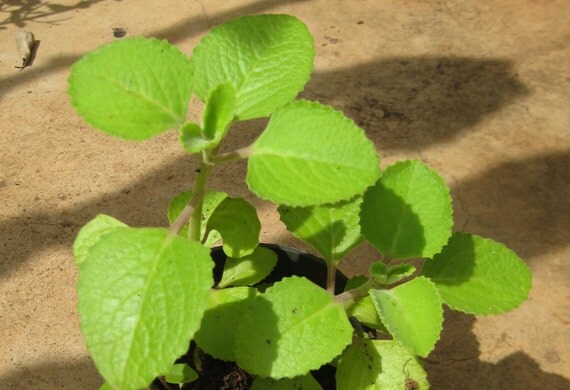
Aywain Plant
Ajwain is an herb which has plenty of health benefits. It is also know as Bishop Weed. It is very good for stomach respiratory problem...