Wednesday, November 30, 2011

A Descriptive Study of the Practice Patterns of Massage New Zealand Massage Therapists

Joanna M. Smith, PhD,1 S. John Sullivan, PhD,2 and G. David Baxter, DPhil2

Background:
Massage therapy has grown in popularity, yet little is known globally or in New Zealand about massage therapists and their practices.
Purpose and Setting:
The aims of this study were to describe the practice patterns of trained Massage New Zealand massage therapists in New Zealand private practice, with regard to therapist characteristics; practice modes and settings, and therapy characteristics; referral patterns; and massage therapy as an occupation.
Research Design and Participants:
A survey questionnaire was mailed to 66 trained massage therapist members of Massage New Zealand who were recruiting massage clients for a concurrent study of massage therapy culture.
Results:
Most massage therapists were women (83%), NZ European (76%), and holders of a massage diploma qualification (89%). Massage therapy was both a full- (58%) and part-time (42%) occupation, with the practice of massage therapy being the only source of employment for 70% of therapists. Nearly all therapists (94%) practiced massage for more than 40 weeks in the year, providing a median of 16 – 20 hours of direct client care per week. Most massage therapists worked in a “solo practice” (58%) and used a wide and active referral network. Almost all therapists treated musculoskeletal symptoms: the most common client issues or conditions treated were back pain/problem (99%), neck/shoulder pain/problem (99%), headache or migraine (99%), relaxation and stress reduction (96%), and regular recovery or maintenance massage (89%). The most frequent client fee per treatment was NZ$60 per hour in a clinic and NZ$1 per minute at a sports event or in the workplace. Therapeutic massage, relaxation massage, sports massage, and trigger-point therapy were the most common styles of massage therapy offered. Nearly all massage therapists (99%) undertook client assessment; 95% typically provided self-care recommendations; and 32% combined other complementary and alternative medicine therapies with their massage consultations.
Conclusions:
This study provides new information about the practice of massage therapy by trained massage therapists. It will help to inform the massage industry and other health care providers, potential funders, and policymakers about the provision of massage therapy in the NZ health care system.
 

Tuesday, November 22, 2011

Muscle Morphological and Strength Adaptations to Endurance Vs. Resistance Training

Farup, Jean; Kjølhede, Tue; Sørensen, Henrik; Dalgas, Ulrik; Møller, Andreas B; Vestergaard, Poul F; Ringgaard, Steffen; Bojsen-Møller, Jens; Vissing, Kristian

Abstract

Farup, J, Kjolhede, T, Sorensen, H, Dalgas, U, Moller, AB, Vestergaard, PF, Ringgaard, S, Bojsen-Moller, J, and Vissing, K. Muscle morphological and strength adaptations to endurance vs. resistance training. J Strength Cond Res 25(X): 000-000, 2011-Fascicle angle (FA) is suggested to increase as a result of fiber hypertrophy and furthermore to serve as the explanatory link in the discrepancy in the relative adaptations in the anatomical cross-sectional area (CSA) and fiber CSA after resistance training (RT). In contrast to RT, the effects of endurance training on FA are unclear. The purpose of this study was therefore to investigate and compare the longitudinal effects of either progressive endurance training (END, n = 7) or RT (n = 7) in young untrained men on FA, anatomical CSA, and fiber CSA. Muscle morphological measures included the assessment of vastus lateralis FA obtained by ultrasonography and anatomical CSA by magnetic resonance imaging of the thigh and fiber CSA deduced from histochemical analyses of biopsy samples from m. vastus lateralis. Functional performance measures included [latin capital V with dot above]O2max and maximal voluntary contraction (MVC). The RT produced increases in FA by 23 +/- 8% (p < 0.01), anatomical CSA of the knee extensor muscles by 9 +/- 3% (p = 0.001), and fiber CSA by 19 +/- 7% (p < 0.05). RT increased knee extensor MVC by 20 +/- 5% (p < 0.001). END increased [latin capital V with dot above]O2max by 10 +/- 2% but did not evoke changes in FA, anatomical CSA, or in fiber CSA. In conclusion, the morphological changes induced by 10 weeks of RT support that FA does indeed serve as the explanatory link in the observed discrepancy between the changes in anatomical and fiber CSA. Contrarily, 10 weeks of endurance training did not induce changes in FA, but the lack of morphological changes from END indirectly support the fact that fiber hypertrophy and FA are interrelated.

(C) 2011 National Strength and Conditioning Association
Journal of Strength & Conditioning Research:
POST AUTHOR CORRECTIONS, 18 November 2011
doi: 10.1519/JSC.0b013e318225a26f


Wednesday, November 16, 2011

When to Initiate Integrative Neuromuscular Training to Reduce Sports-Related Injuries and Enhance Health in Youth?

Myer, Gregory D. PhD, CSCS1,2,4,7; Faigenbaum, Avery D. EdD, FACSM3; Ford, Kevin R. PhD, FACSM1,2; Best, Thomas M. PhD, FACSM4,5; Bergeron, Michael F. PhD, FACSM6; Hewett, Timothy E. PhD, FACSM1,2,4,7

 Current Sports Medicine Reports:
May/June 2011 - Volume 10 - Issue 3 - pp 155-166
doi: 10.1249/JSR.0b013e31821b1442

Abstract

Regular participation in organized youth sports does not ensure adequate exposure to skill- and health-related fitness activities, and sport training without preparatory conditioning does not appear to reduce risk of injury in young athletes. Current trends indicate that widespread participation in organized youth sports is occurring at a younger age, especially in girls. Current public health recommendations developed to promote muscle strengthening and bone building activities for youth aged 6 yr and older, along with increased involvement in competitive sport activities at younger ages, has increased interest and concern from parents, clinicians, coaches, and teachers regarding the optimal age to encourage and integrate more specialized physical training into youth development programs. This review synthesizes the latest literature and expert opinion regarding when to initiate neuromuscular conditioning in youth and presents a how-to integrative training conceptual model that could maximize the potential health-related benefits for children by reducing sports-related injury risk and encouraging lifelong, regular physical activity.
© 2011 American College of Sports Medicine
 

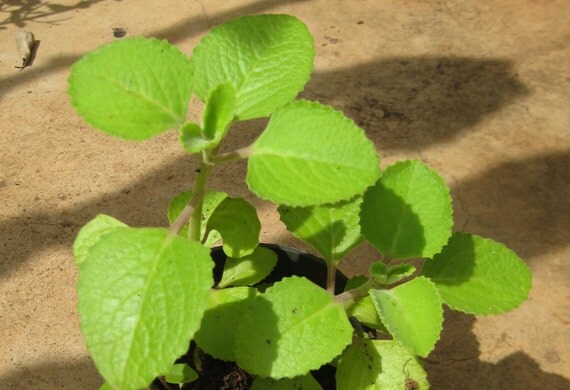
Aywain Plant

Ajwain is an herb which has plenty of health benefits. It is also know as Bishop Weed.  It is very good for stomach respiratory problem...